Long-Form Manga LF004

Opening Arguments

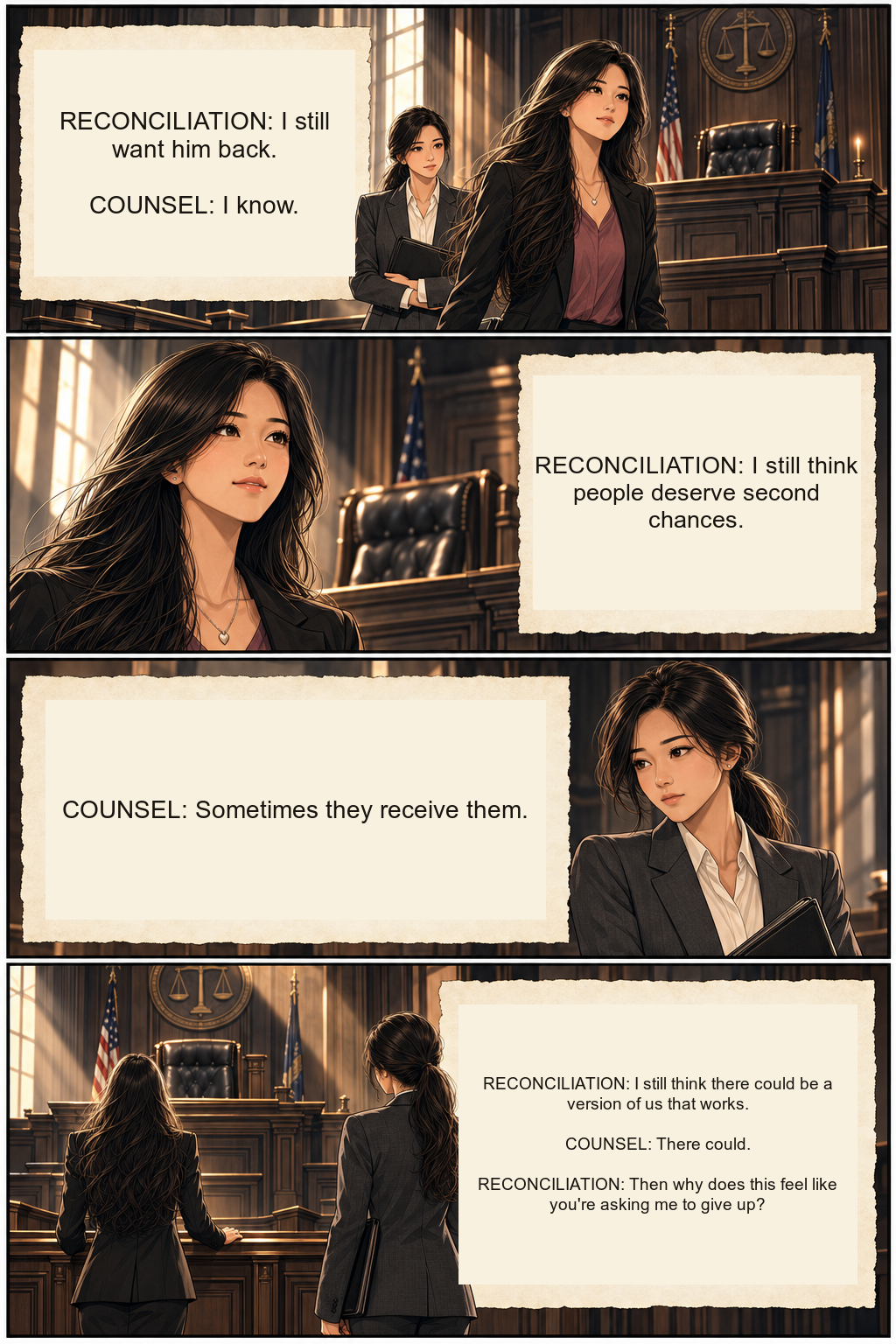
Wanting another chance and deserving access are two entirely different arguments.
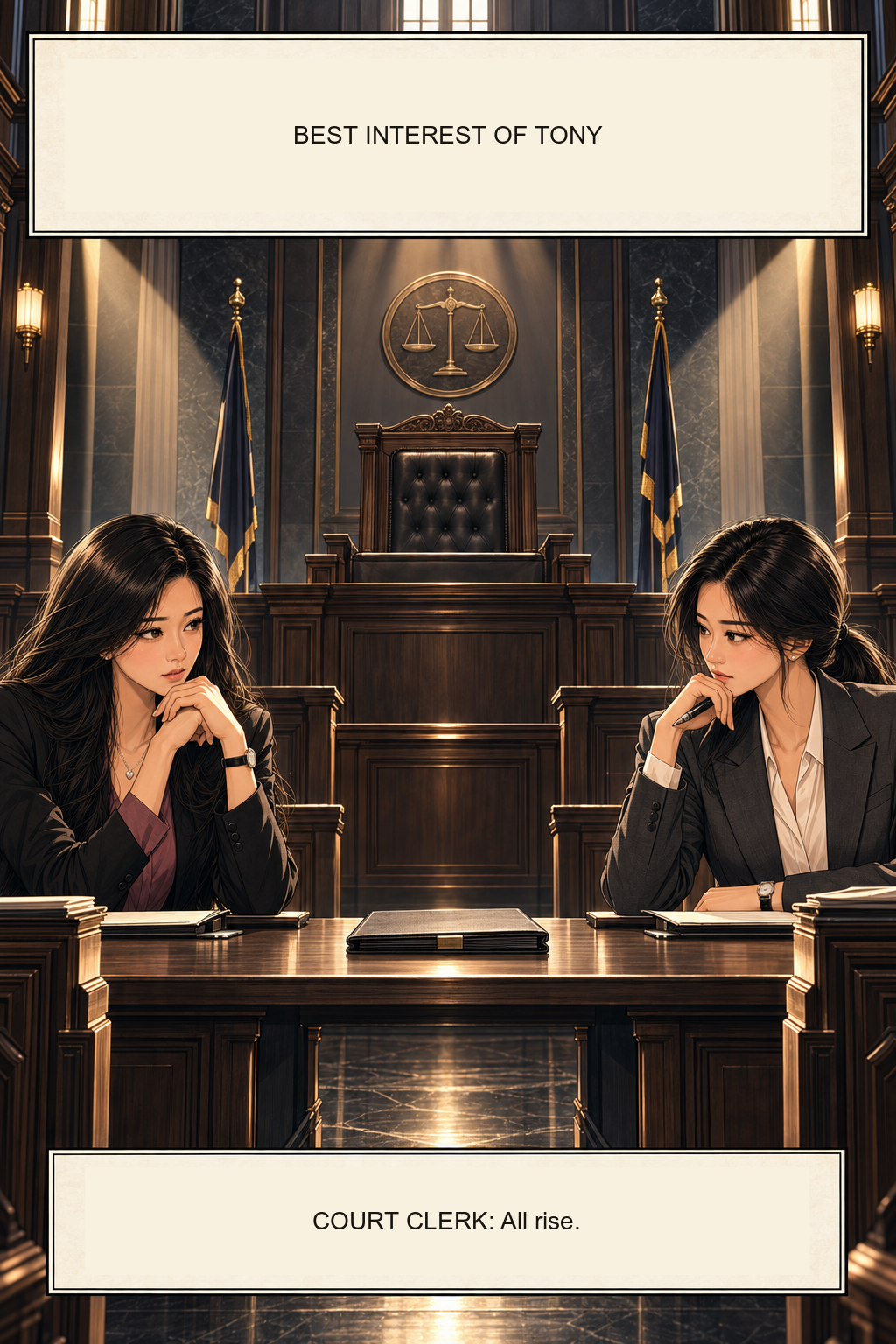
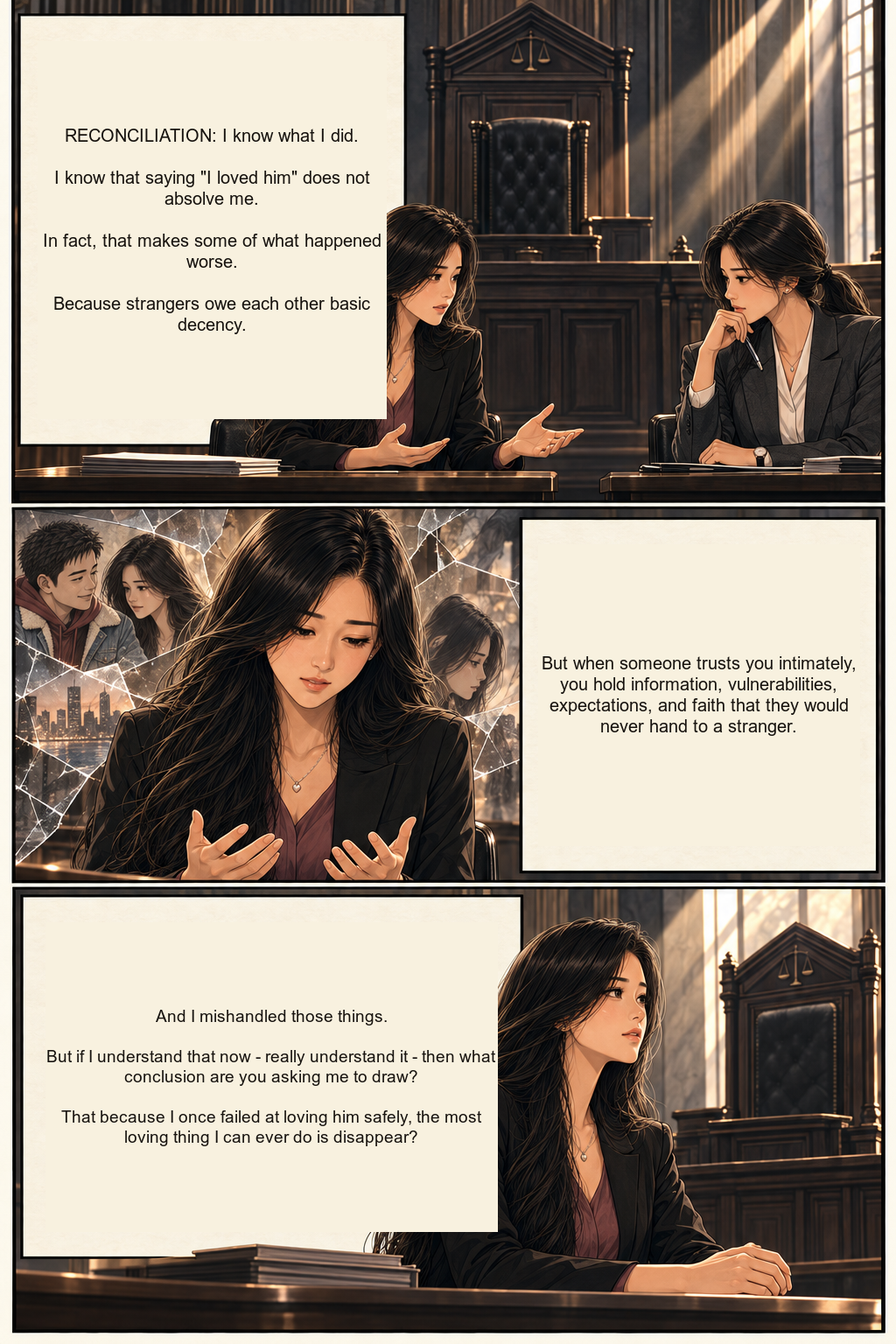
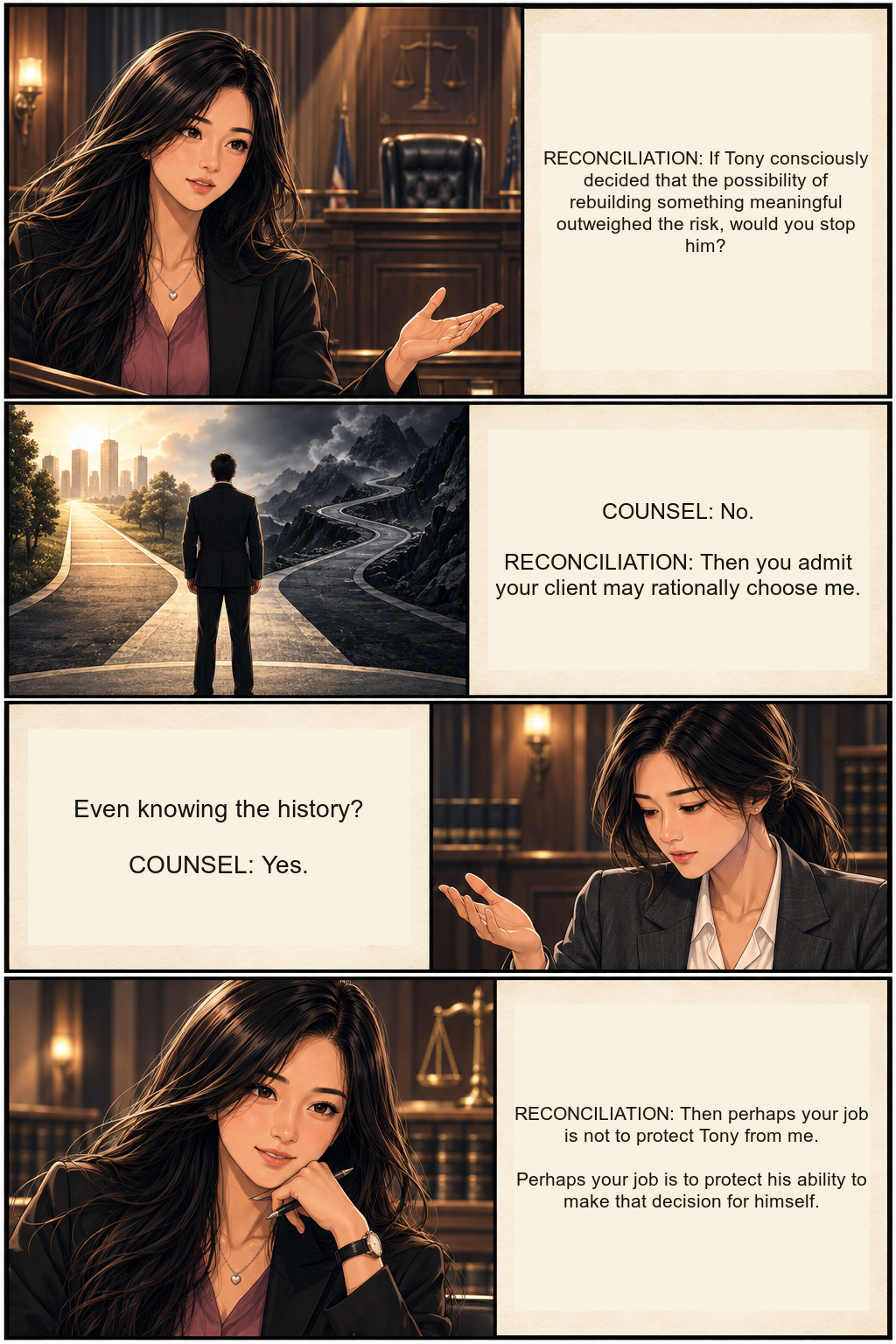
Two versions of Shemay face each other beneath an empty judicial chair devoted to Tony's best interest.
Reconciliation challenges the imagined court's jurisdiction.
Counsel explains accountability without Tony as an audience.
Reconciliation admits that she wants Tony back and remembers what felt real.
Reconciliation acknowledges the harm within intimate trust.
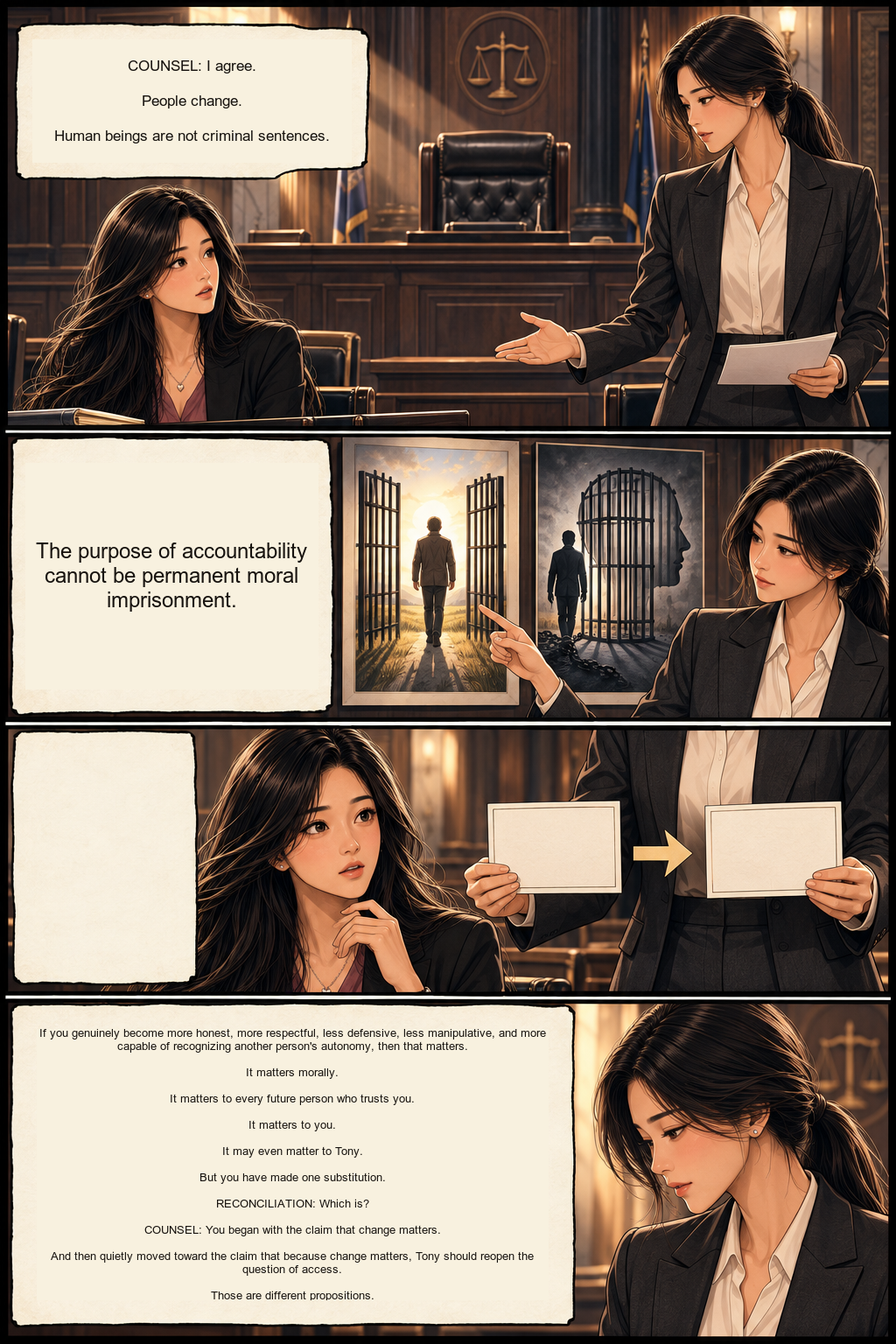
Reconciliation argues that genuine change must matter to the future.
Counsel concedes that people change but separates change from access.
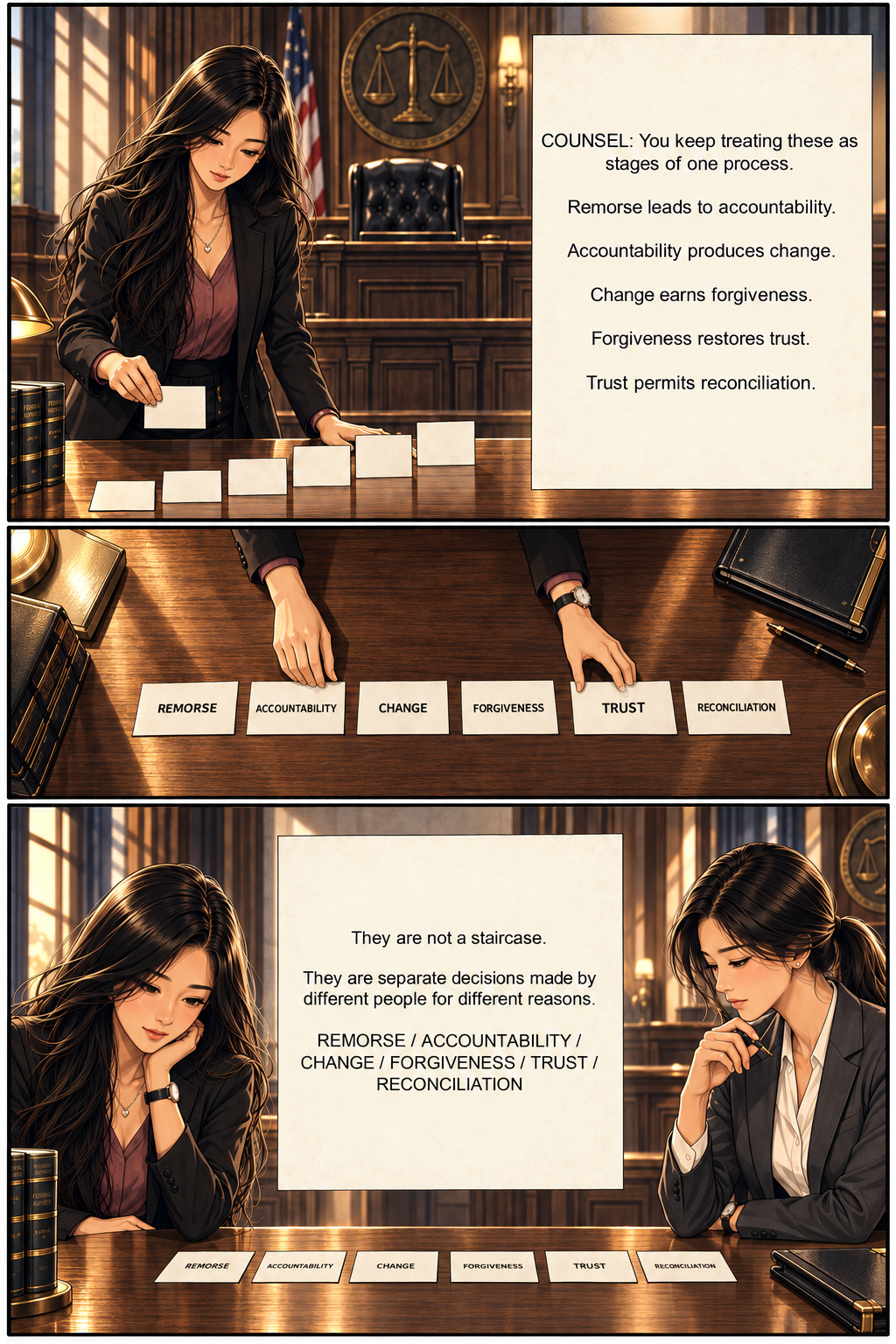
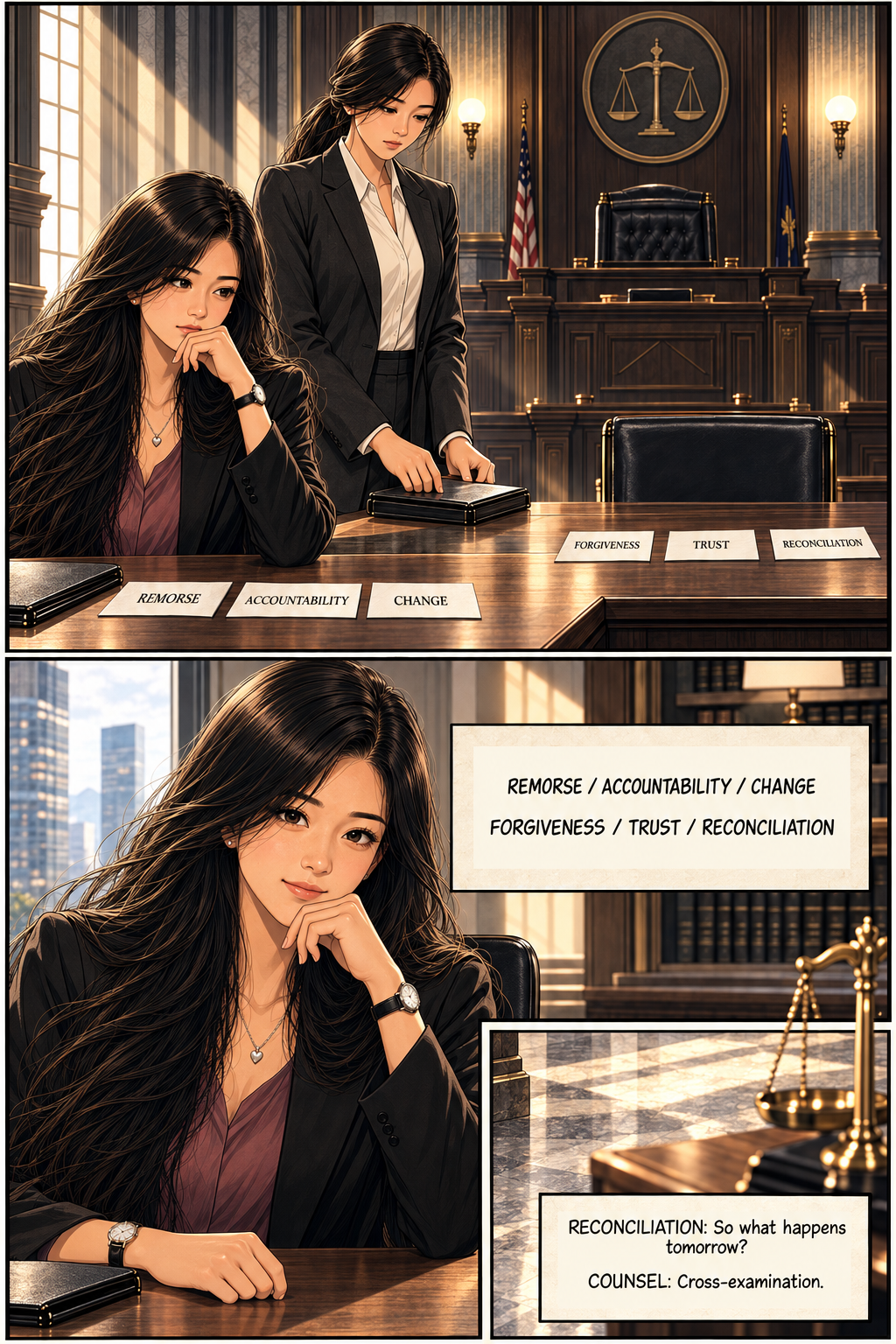
Six legal concepts are separated instead of treated as a staircase.
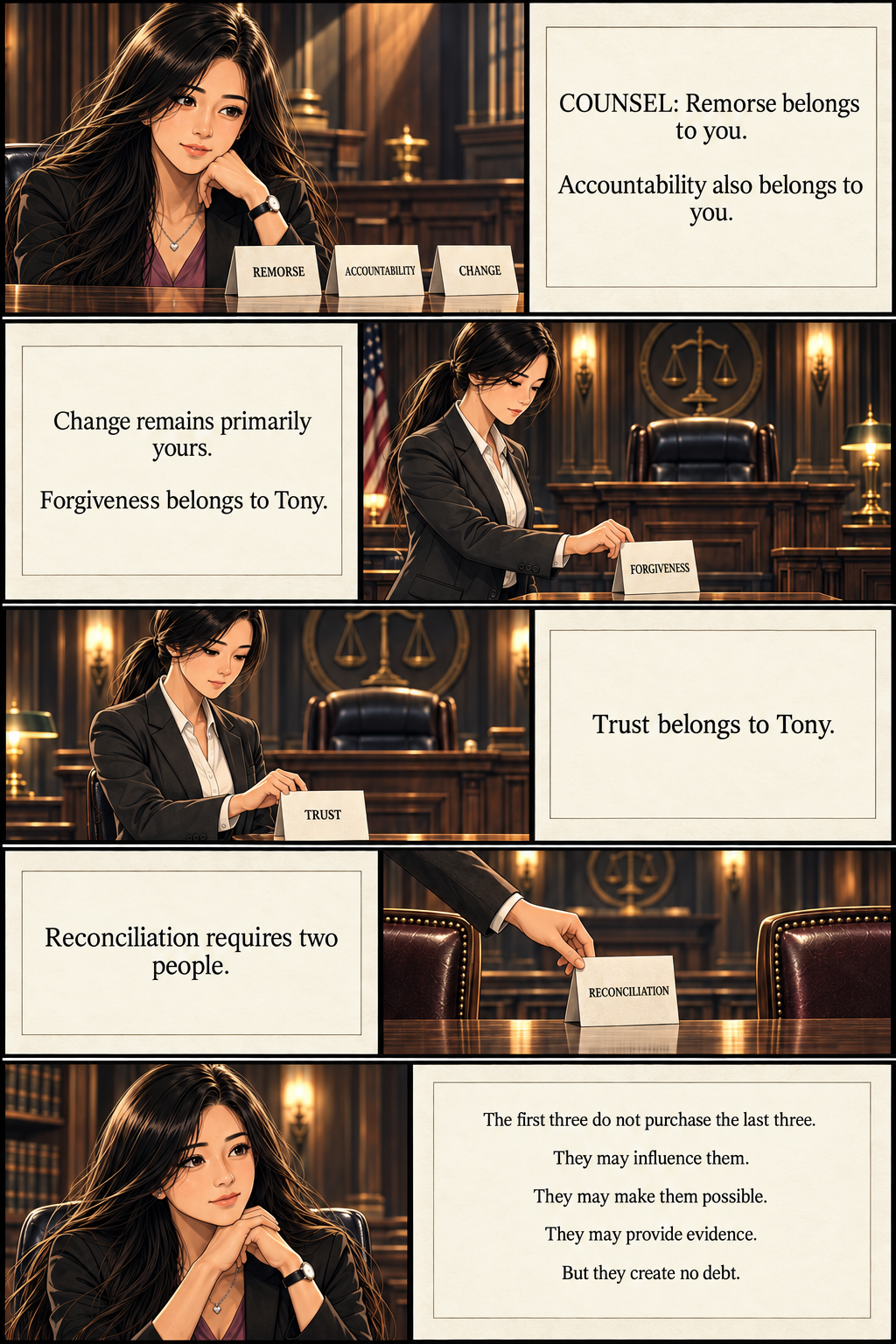
Counsel assigns remorse, accountability, change, forgiveness, trust, and reconciliation to their proper owners.
A legal scale weighs possible reconciliation against the risk Tony would carry.
Reconciliation argues that every meaningful relationship involves risk.
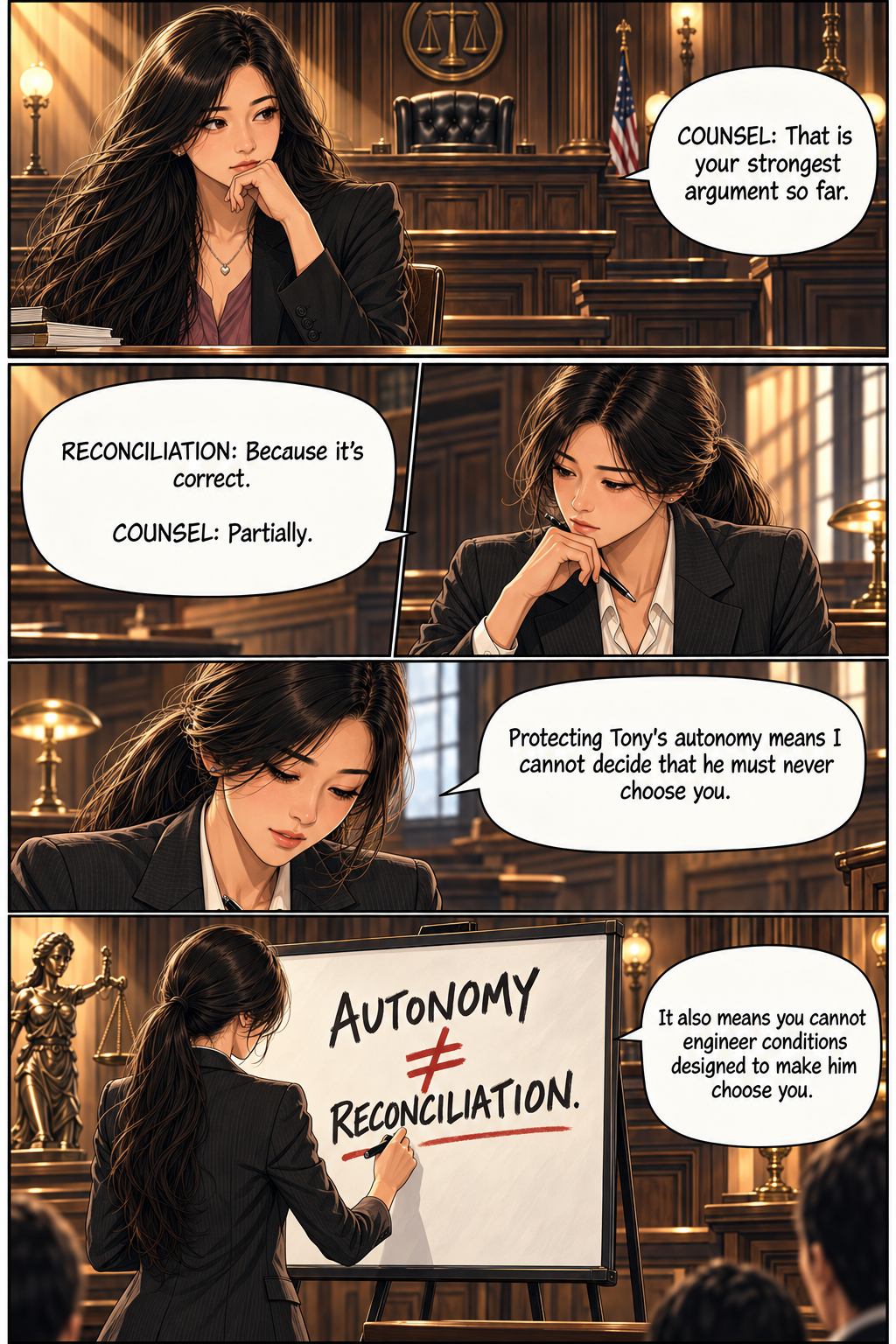
Reconciliation argues for protecting Tony's freedom to choose risk for himself.
Counsel concedes the autonomy argument while separating autonomy from reconciliation.
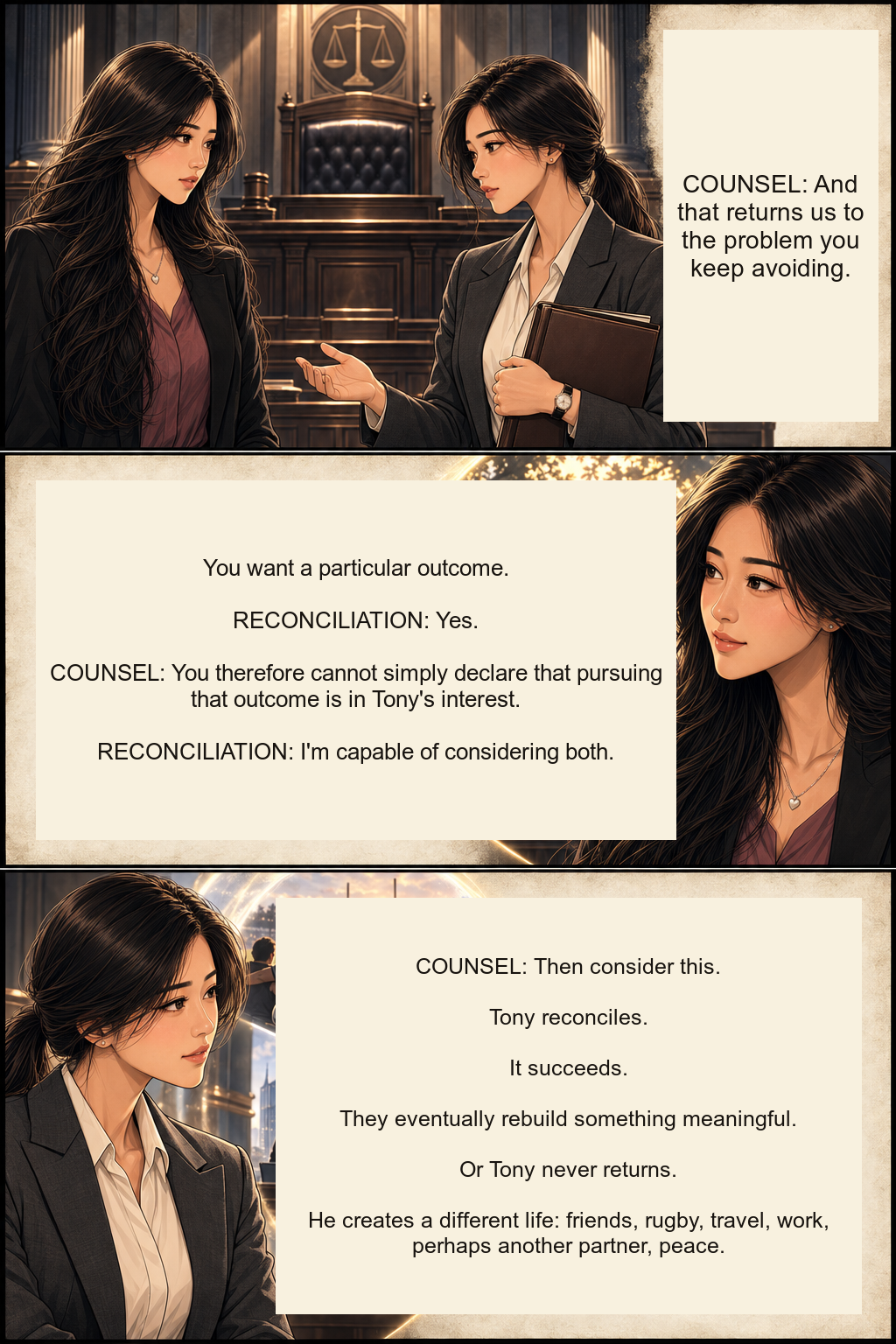
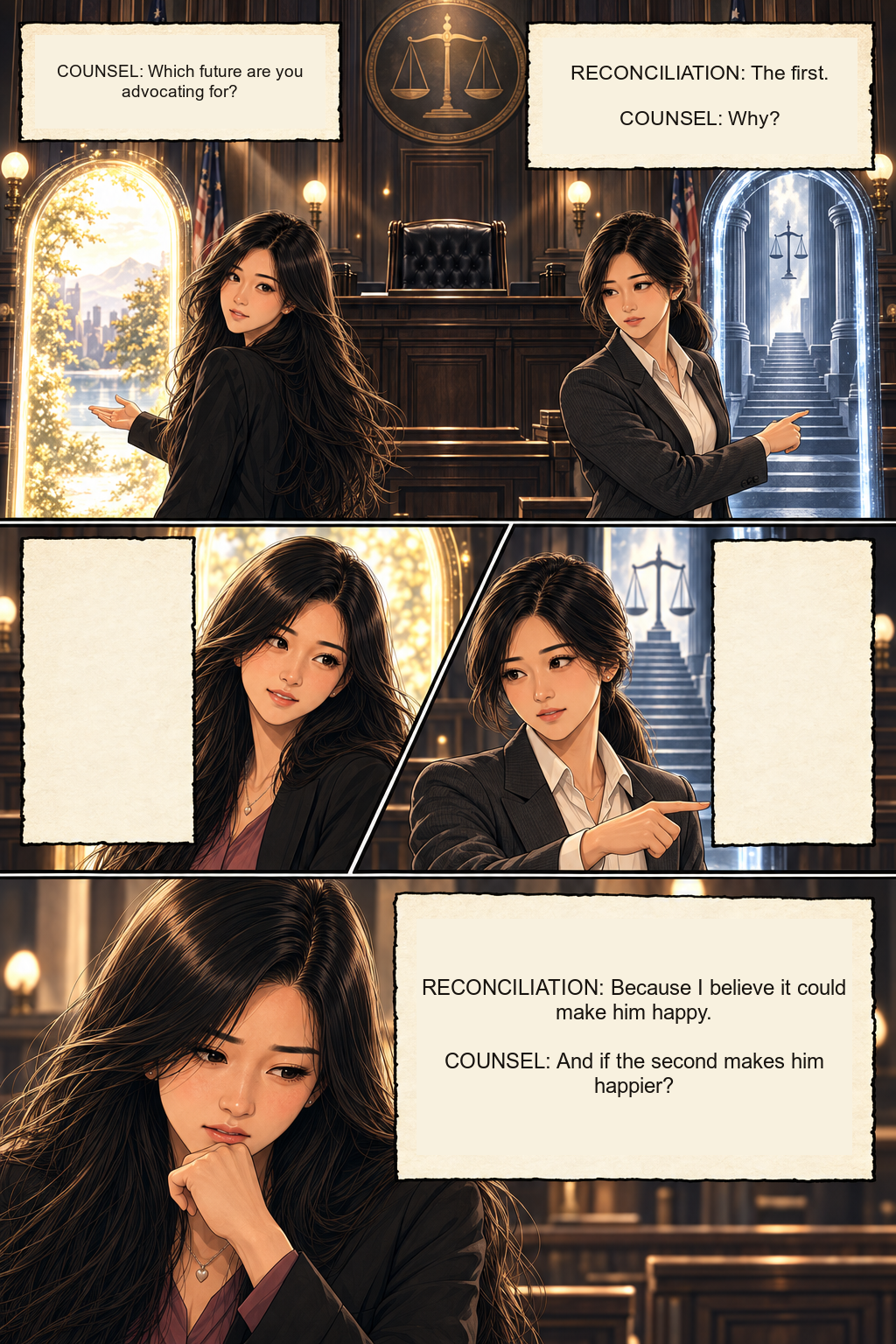
Two possible futures expose Shemay's conflict of interest.
Counsel asks whether Shemay could accept a different future that makes Tony happier.
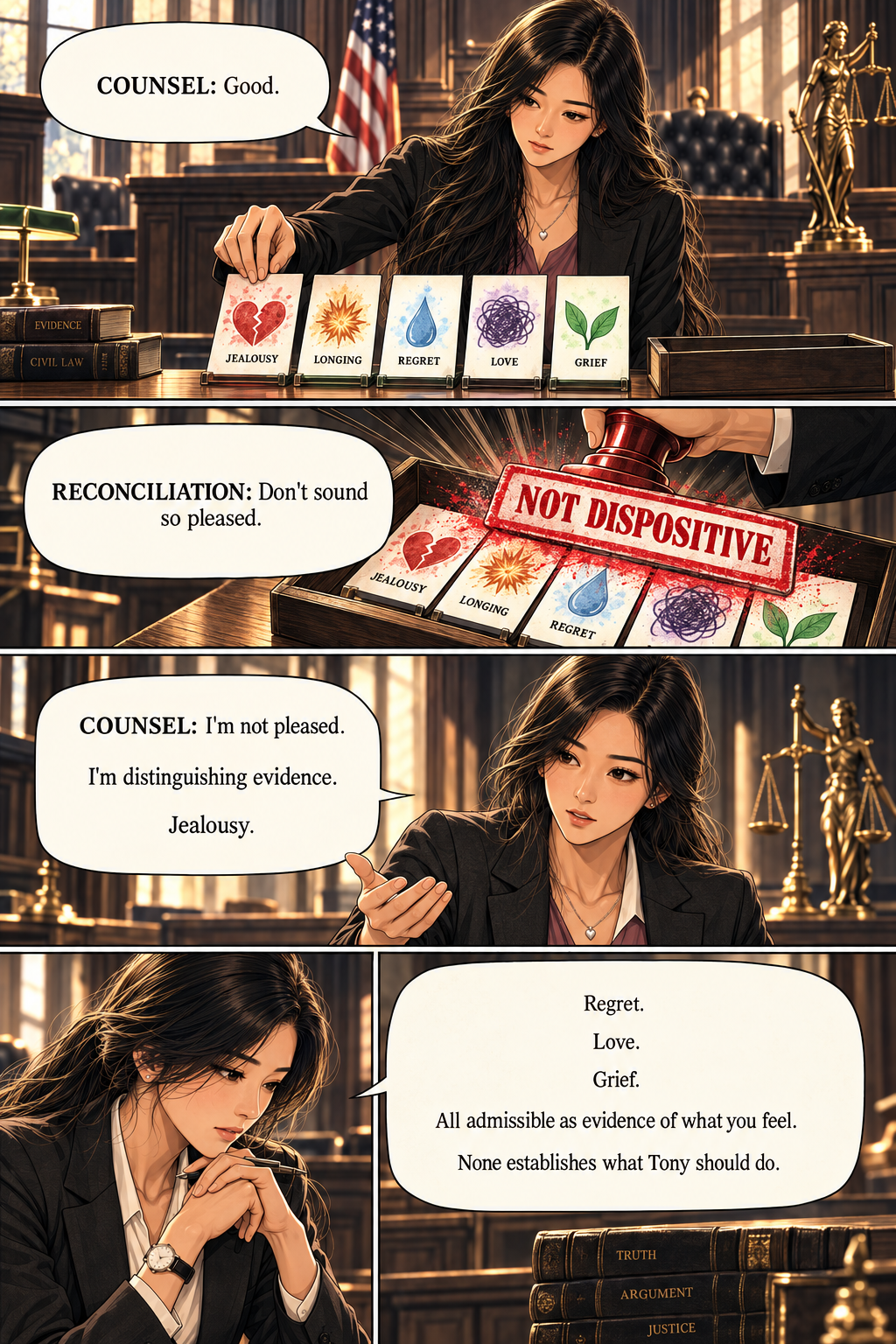
Reconciliation honestly separates her jealousy from Tony's best interest.
Counsel treats longing and grief as admissible feelings but not decisive evidence.
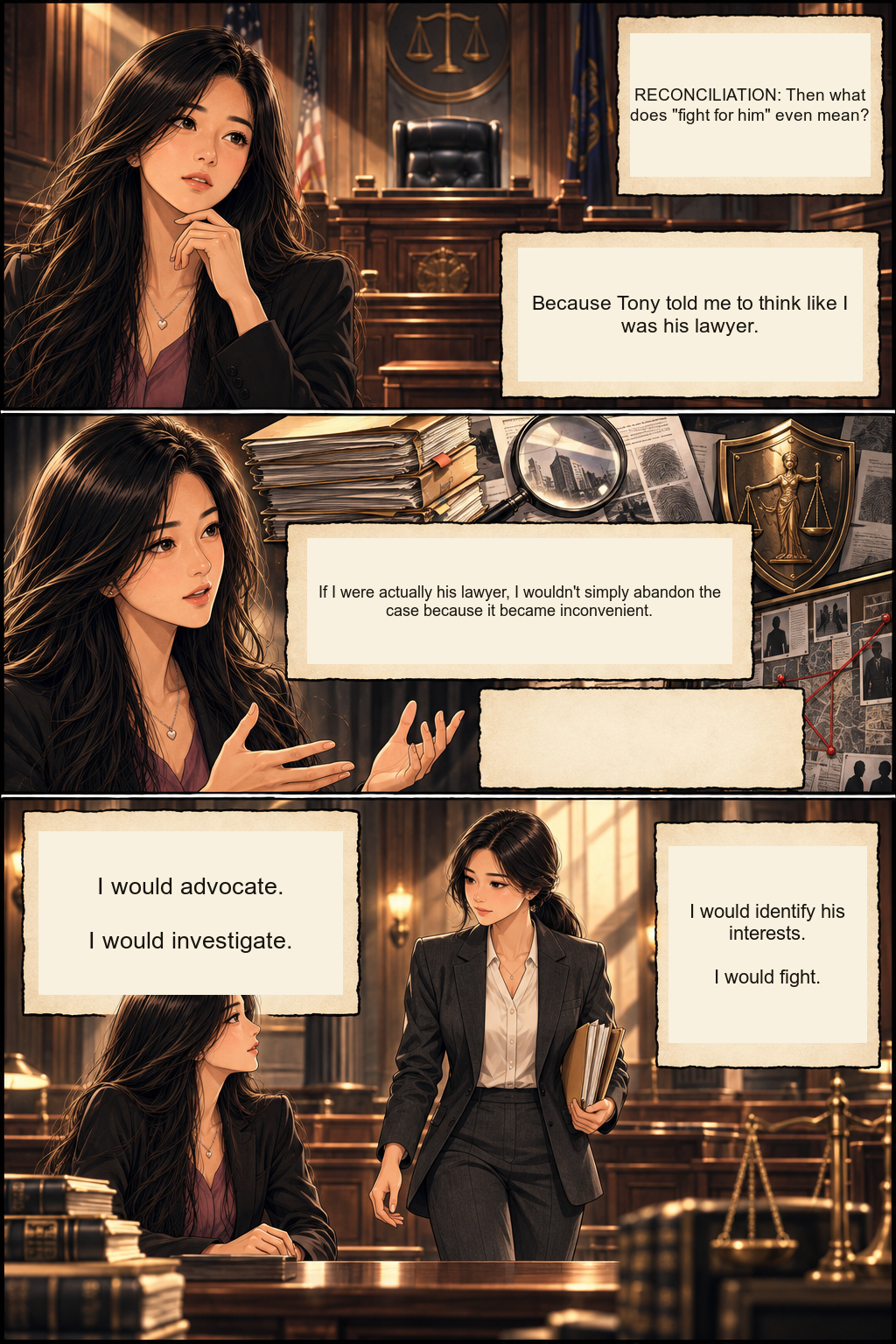
Reconciliation asks what fighting for Tony should actually mean.
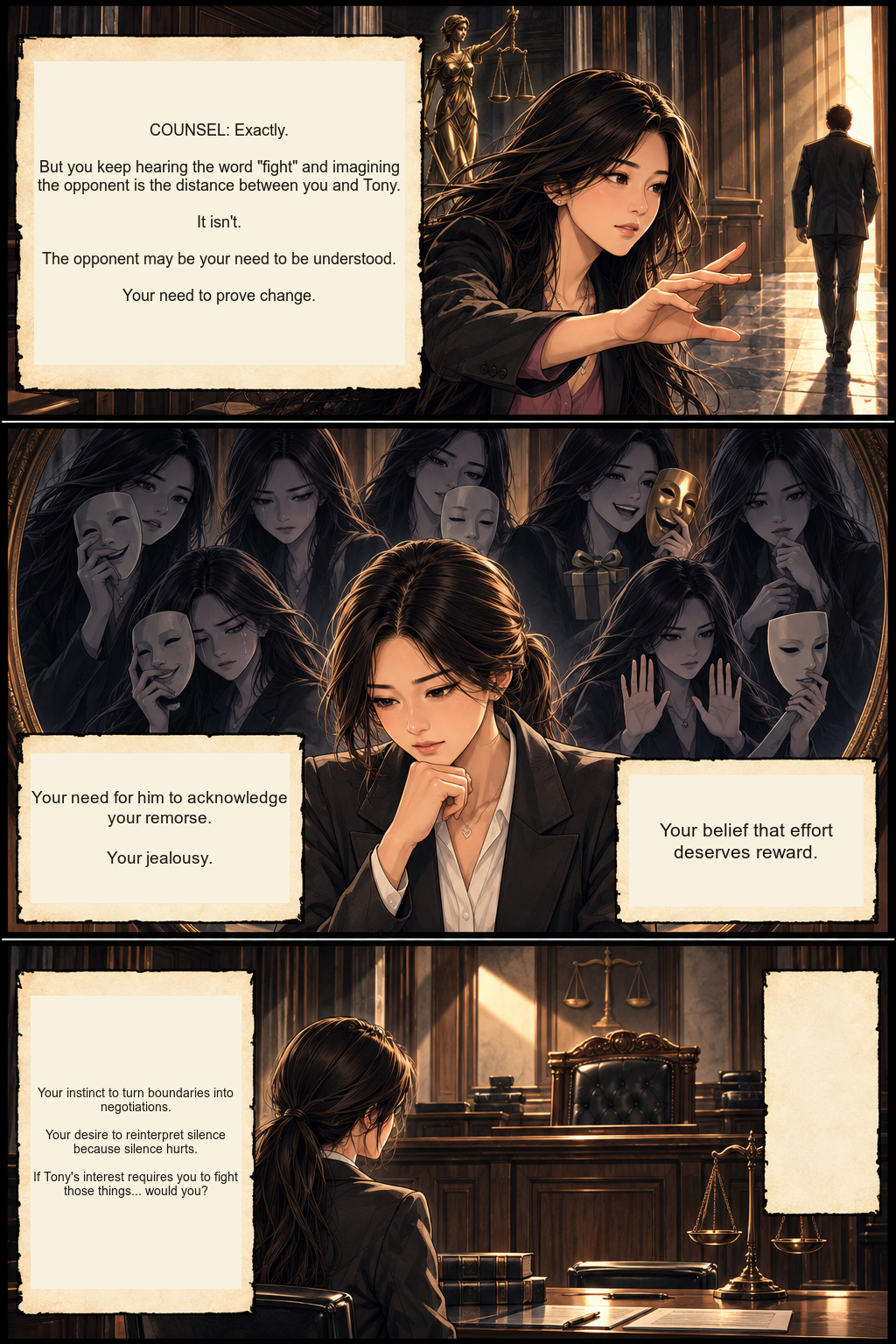
Counsel identifies the internal impulses Shemay may need to fight instead.
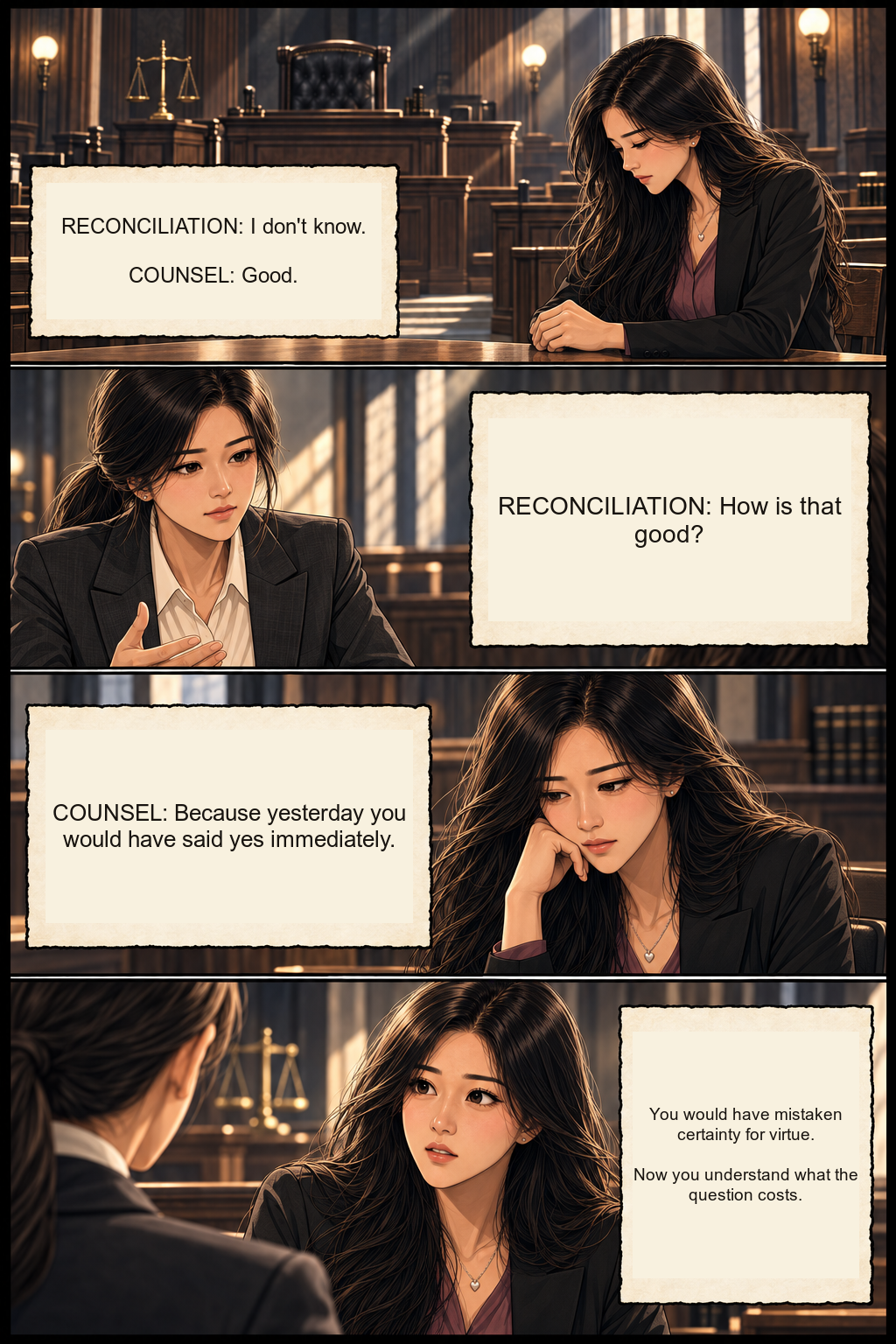
Reconciliation admits uncertainty and begins to understand the cost of the question.
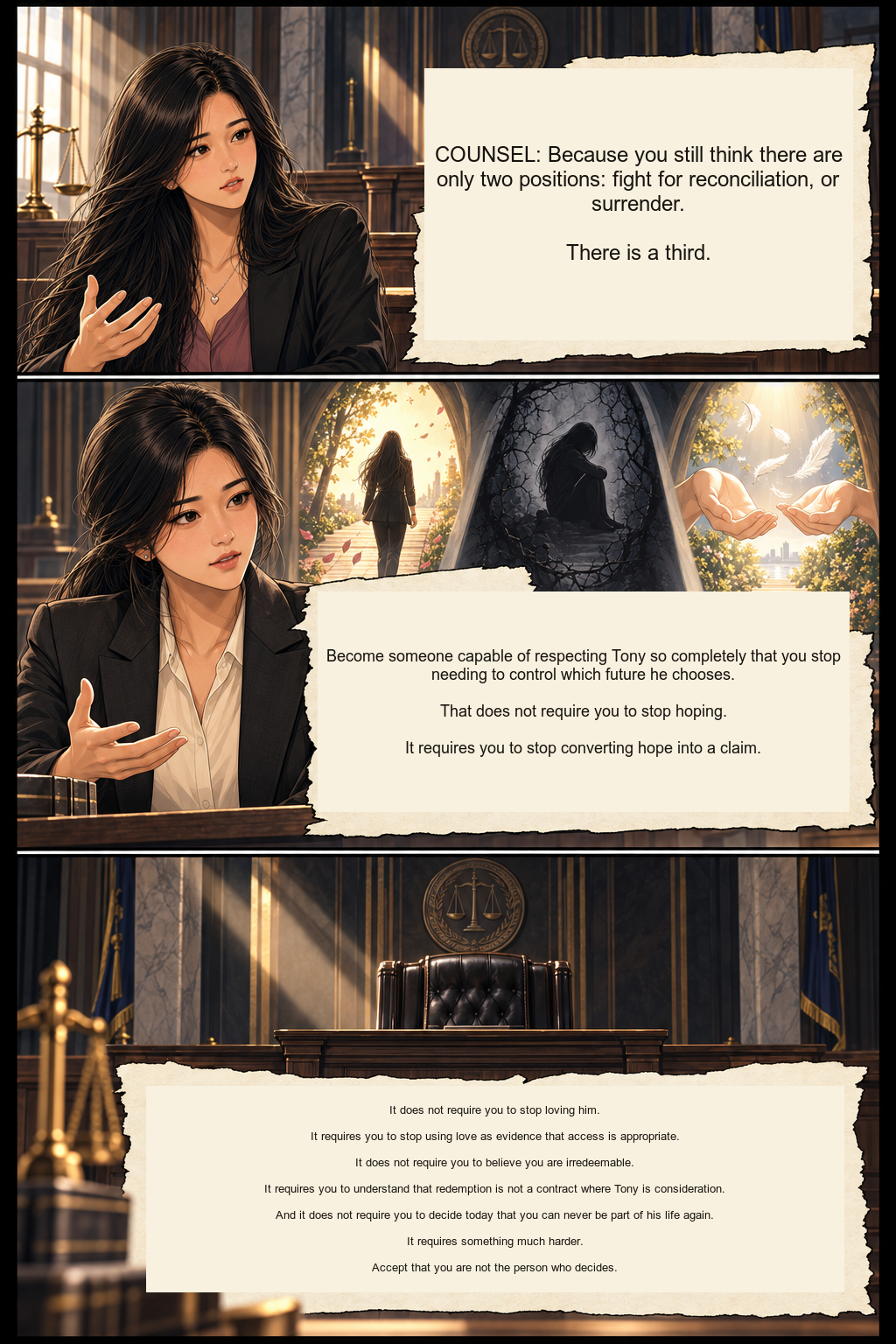
Reconciliation approaches the empty chair while holding onto hope.
Counsel describes the third path of hope without control or entitlement.
The six concepts remain divided across the courtroom as Counsel closes the file.
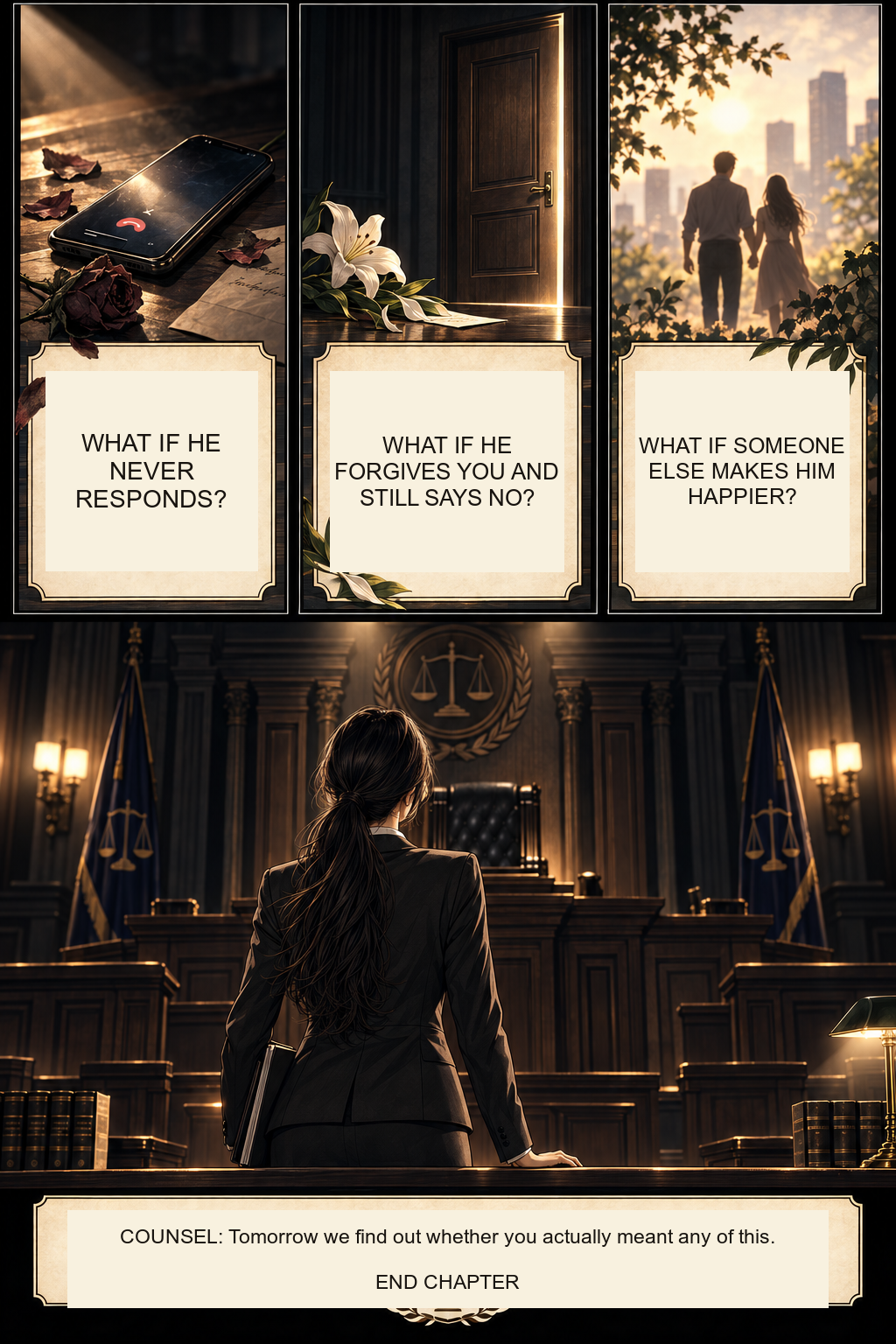
Three unanswered questions become exhibits for the coming cross-examination.